
Blog articles
The importance of using the right edgeband in furniture production

The edge banding is an essential component in furniture production, immediately after formatting and sizing the chipboard, MDF or HDF panels.
From the outset, we would like to stress the importance of using high-quality edge banding in furniture manufacturing. Although this product is not one of the major costs of furniture production, applying it with an automatic edge banding machine benefits both the end customer and the manufacturer.
Quality edging provides a finished and professional look to the edges, hiding rough edges, giving a pleasing and uniform visual appearance. At the same time, quality edging provides protection for users, especially in high-traffic areas or environments with children.
Below are a few examples of poor-quality edge banding.

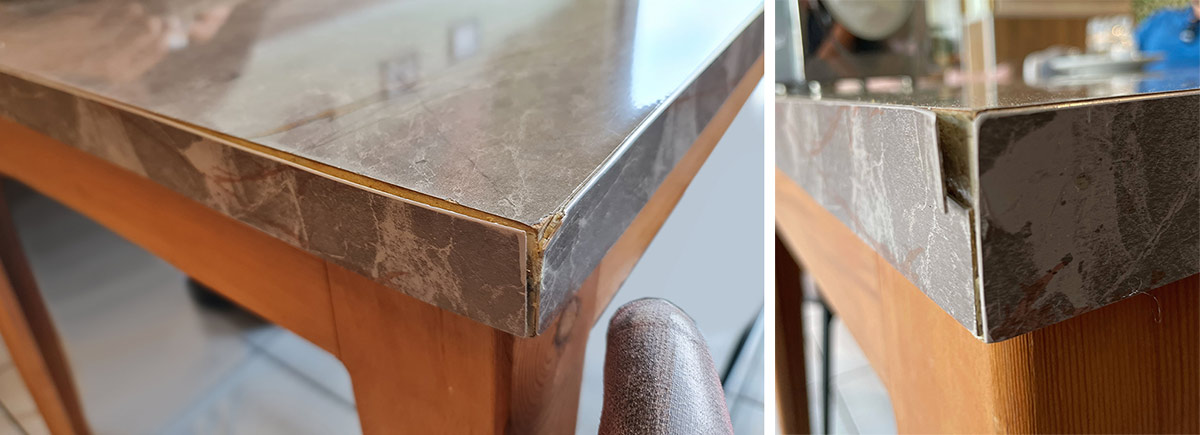
Even if we choose the best chipboard and design it in an exceptional design, peeling edges significantly reduce the overall quality of the furniture. In the long run, this can lead to an investment of time and money to change the edge or the furniture entirely.
Unlike handles, hinges or sliders, changing the edge requires a workshop to change it.
From a furniture manufacturer's perspective, servicing the edges of a completed project is not desirable. For this reason, we encourage manufacturers to include an edge banding machine appropriate for the type of work performed, in addition to using a high-quality edge banding.
The technology of applying edgebanding has evolved significantly, as have the materials from which this material is made. The evolution also brings with it the liberalization of this process, making it accessible to any type of production workshop. The days of applying edgebanding with an iron will be gradually left behind, fortunately.


To summarize, using a quality edge banding brings with it several important advantages:
- Improves aesthetics: Quality edging provides a finished, professional look to the edges of furniture, cabinets, and other wood products. It hides rough edges and adds a nice, even look.
- Durability and Protection: The edge banding protects against moisture, impact and general wear and tear. It helps prevent chipping, cracking and damage to the vulnerable edges of the base material, thus extending the life of the product.
- Improve safety: Rough edges can be dangerous, especially in environments with children or heavy traffic. Using edging eliminates sharp edges, making furniture or surfaces safer to use.
- Versatility: Quality edging is available in a variety of materials, colors, patterns and finishes, allowing for customization and design flexibility. It can match or complement the surface material, adding a cohesive and harmonious look to the entire design.
- Ease of maintenance: The edging makes cleaning and maintenance easy. It creates a smooth, non-porous edge that is easy to wipe clean and resistant to stains or dirt buildup.
- Cost-effectiveness: Investing in a quality edge banding can save you money in the long run. By protecting the edges of the base material, you reduce the need for costly repairs or replacements due to edge damage.
- Time efficiency: Using edging facilitates the production or assembly process, eliminating the need for additional steps such as sanding or finishing rough edges. This speeds up production and installation, saving time.
- Customizable Thickness: The edging can be tailored to different thicknesses to suit different base materials and design requirements. This allows for consistent thickness at the edges, contributing to a more professional look.
Overall, using a quality edgeband improves the functionality, appearance, and durability of furniture, cabinets, and other wood products, making it a valuable choice for manufacturers, designers, and end users.


